The owner-and-pet photo has a built-in problem: you're the photographer, so by definition you're not in the picture. Solving it takes one of three approaches — hand the camera to someone, hold it yourself at arm's length, or set it down and let it wait. Each has a craft, and the third one changes everything.
Approach one: the two-second helper
A housemate, a neighbor, a passing family member — anyone can be a photographer for thirty seconds if you set them up to succeed: phone at the pet's eye level (show them the height), burst on, you kneel with the pet and a treat held at the helper's pocket. Direction matters more than skill: "press and hold when I say" is the whole brief.
Approach two: the arm's-length selfie, done right
The front-camera selfie is the lowest-quality option but the always-available one, and three habits lift it:
- Face a window — the lighting rules apply doubly to front cameras, which are weaker in dim light.
- Hold the pet against your chest, lens slightly above, looking down at a shallow angle. This is the framing that flatters both faces and keeps a squirming cat contained.
- Burst and a sound: you're one-handed, so set a three- or ten-second timer on the front camera and use both hands on the pet — the sound trick that earns the ears-up moment is in the attention guide.
Selfies are also, quietly, useful raw material: one honest two-faces photo is a legitimate pose reference when you later make a portrait.
Approach three: set the phone down (the game-changer)
Prop the phone on a shelf, a stack of books, a windowsill — anything at pet-eye level — and use the timer or, better, your camera app's interval/burst remote if you have a watch or a second device. Now both your hands are on the pet, and you're photographing a moment instead of pressing a button:
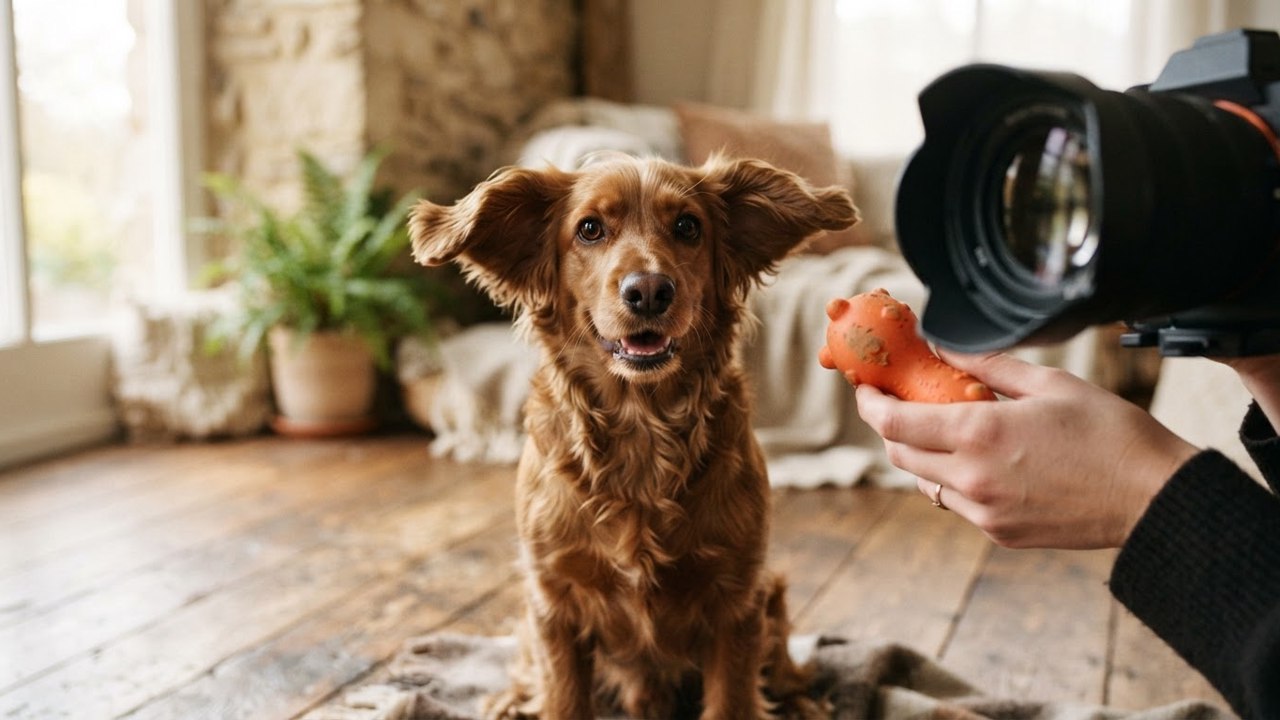
- The treat-at-the-lens play: place a treat on the phone (yes, on it). The pet stares at the lens, begging for the camera — the classic viral framing.
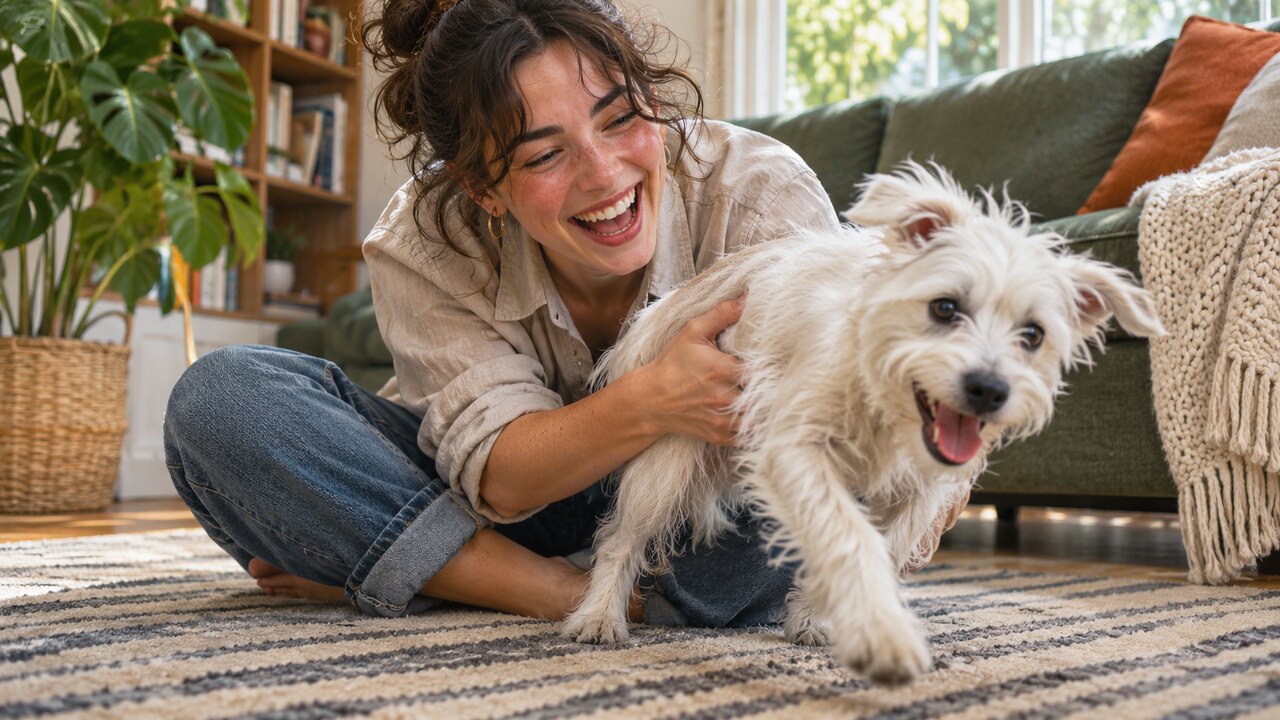
- The interaction beats the pose: you laughing while the cat climbs your shoulder outperforms two subjects grinning at nothing. Frame wide, shoot bursts, crop later.
- composition check before the timer starts: is there room next to your heads? Is the background the shelf of laundry? Ten seconds of setup, per the background rules.
The framing that rescues a wriggler
When the pet simply will not hold still in your arms: put them on your lap facing away, chin over their shoulder, your face beside theirs. It's the natural containment pose — animals settle when held firmly against a chest — and it reads as a hug, which it is.
From real photo to ideal portrait
Here's the honest full-circle: the together-photo is hard, and that difficulty is precisely what AI portraits are for. Use these techniques to capture you clearly and the pet clearly in separate shots — that's all the model needs — and let it solve the together-in-one-frame problem it was built for. The reference guide shows exactly which photos to take.
Frequently asked questions
Front camera or back camera for selfies with pets?
Back camera propped at a distance, every time — it's the sharper sensor, and propping frees your hands. Front camera only when nothing's available to prop against.
How do I look at the camera instead of at my pet?
Look at the lens, not the screen-image of yourself — a habit from two sessions of practice. The pet's glance can wander; yours is the anchor of the photo.
My pet leaves the instant I set the phone down.
Tire them first, shoot in the room they like best, and make the phone-spot part of normal life for a few days (treats appear near it). Pets ignore cameras they've seen a hundred times.