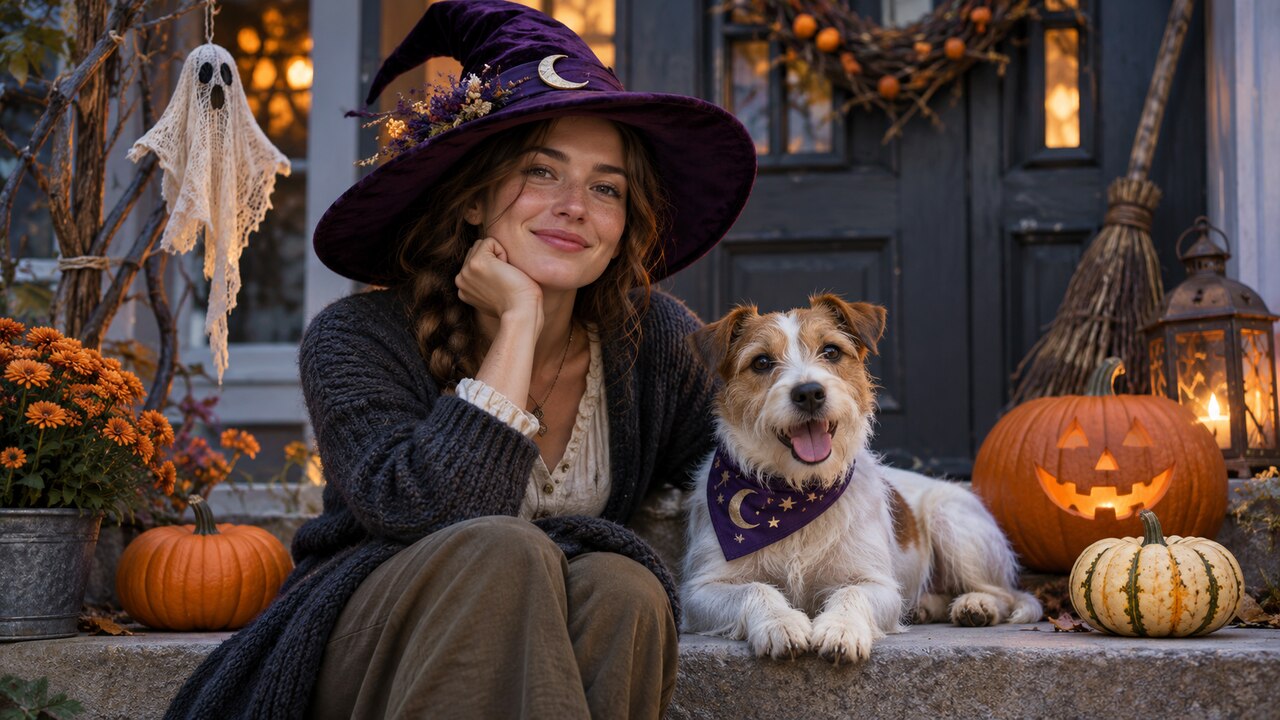
Every October the internet fills with owner-and-pet costume photos, and the difference between the magical ones and the miserable ones is never the costume budget — it's whether the animal tolerated the outfit and whether the pair read as a pair. This is the guide to both: matching concepts that photograph, and the portrait method that skips the tolerance problem entirely.
Pairs that read instantly
- Dynamic duo, one costume language: witch + black cat (the original), cowboy + corgi in a bandana, detective + hound with a deerstalker-ish collar. One clear archetype shared between species beats two elaborate unrelated costumes.
- Color twins: both in the same palette — purple-and-black, orange-and-cream — with you carrying the detail and the pet carrying the color. The calmest version; see the twinning guide's match-the-concept rule.
- Famous pairs: you as the character, the pet as the sidekick — the pet's half usually just an accessory (hat for you, tiny cape or collar charm for them).
- The "same costume, species-appropriate": you in the full pumpkin outfit, the pet with a pumpkin-orange bandana. Matching intent, comfortable animal.
What pets actually tolerate
- Neck items for all: bandanas, loose scarves, collar covers — the high-tolerance zone.
- Simple hats, briefly, for dogs; anything on a cat's head lasts exactly one frame — use burst mode (attention tricks earn that frame).
- Never: sleeves, full bodysuits on unwilling animals, anything blocking eyes, ears or movement. A stressed animal photographs stressed, and no costume rescues that.
The five-minute rule: if the pet hasn't accepted the item in five minutes, the item loses. Photograph the tolerance, not the struggle.
Generate the costume instead
The quiet superpower of AI portraits: the costume doesn't have to exist. One clause in the prompt dresses both of you — "she wears a purple witch hat and cloak; the black cat wears a tiny matching purple collar with a pendant" — and the portrait delivers the full matching outfit with zero minutes of animal diplomacy. For costume ideas specifically, this is usually the better route: the concept lives at full ambition, the pet stays comfortable, and reruns are cheaper than a costume the pet vetoes.
The usual identity machinery applies unchanged: reference set plus the markings sentence, faces clear of accessories, one style chosen — studio for the crisp version, cinematic for the moody one.
Shooting the real thing, if you do
- Daylight, before the night: costume portraits are window-light or afternoon jobs; trick-or-treat light will not cooperate.
- Background quiet: the costume is the subject — plain wall or autumn leaves, nothing else (the basics).
- Burst, and settle for the almost: ears at half-mast with the hat still on beats perfect ears with the hat on the floor.
Beyond October
Costume portraits are a year-round genre — birthdays (the ideas list has the party version), themed cards, "superhero duo" Tuesdays. Halloween just gives the deadline; the generated version doesn't need one.
Frequently asked questions
Are costumes stressful for pets?
Neck items, mostly no; head items and sleeves, often yes — individual animals vary enormously. The five-minute rule above is the honest test, and the generate-the-costume route exists so a portrait never depends on the animal's answer.
What's the safest costume for a first attempt?
A themed bandana, full stop. It photographs as "costume," every species tolerates it, and it pairs with any costume of yours.
Can the AI put a real costume my pet hates on them anyway?
Yes — describe the real costume in the prompt and use photos of the pet without it. That's the standard trick for the full-ambition outfits: the pet wears it in the portrait, never in life.