Some portraits are for fun. This page is for the other kind: a portrait of you and a pet who is no longer here, made from the photos that remain. If that's why you're reading, there's no rush in anything that follows — the photos have waited this long, and they'll keep. Nothing on this page has a deadline.
First: it's okay to want this
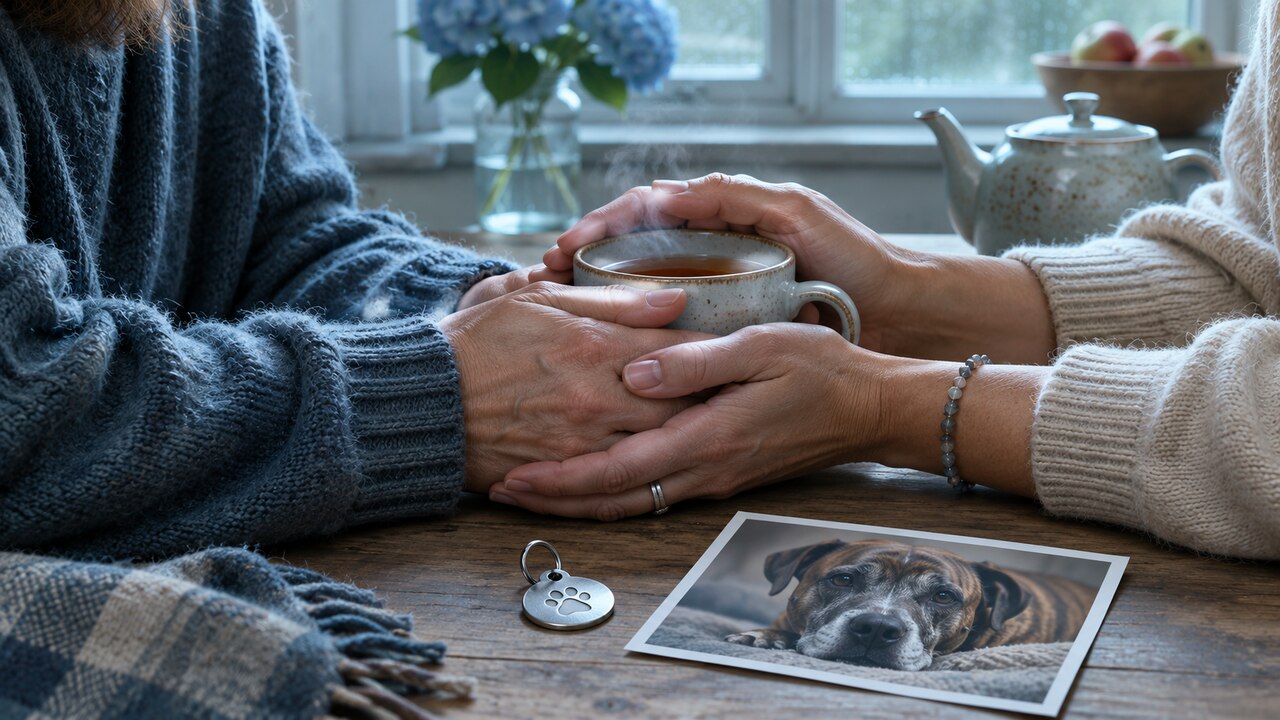
A memorial portrait isn't replacing anything. The photos you have are real and precious; a portrait adds one more image to them — the two of you together in a frame that never got taken, or a quiet scene that suits them better than any snapshot did. People make these for themselves, for their families, for the child who grew up with the animal. It's a normal thing to want, and it can wait as long as it needs to.
Choosing the photos
The quality bar is the same as any portrait — sharp, evenly lit, markings visible — and the selection is different:
- Use the clearest photos, not the most emotional ones. The photo where they're mid-zoomie may be your favorite memory; the calm side-on portrait is what the model needs to get them right. The reference guide covers the bar.
- Photos from their best era are fine. The healthy-year coat, the younger face — most people choose the years they want to remember, and that's a kindness, not a distortion.
- Your own photo can be recent. The portrait is of the two of you now, holding them now.
- One photo of the two of you together, if one exists, helps — not for identity, but for the way you fit together. Even an imperfect one carries that.
Choosing the scene
The right scene is specific to the two of you, but the families of scenes people choose tend to be quiet ones:
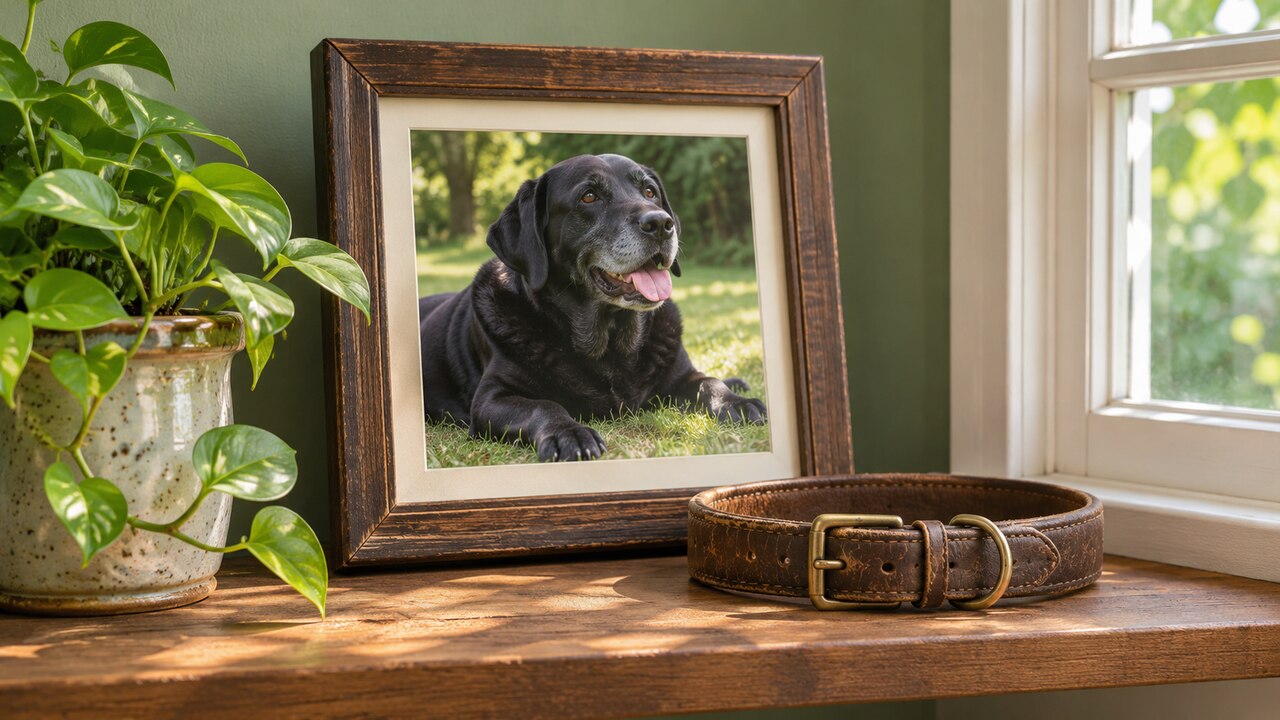
- The real place: the couch corner, the garden patch, the route you walked. Rendered as it was on a good day.
- The soft place: a meadow, a warm window light, somewhere that reads as peaceful without being literal.
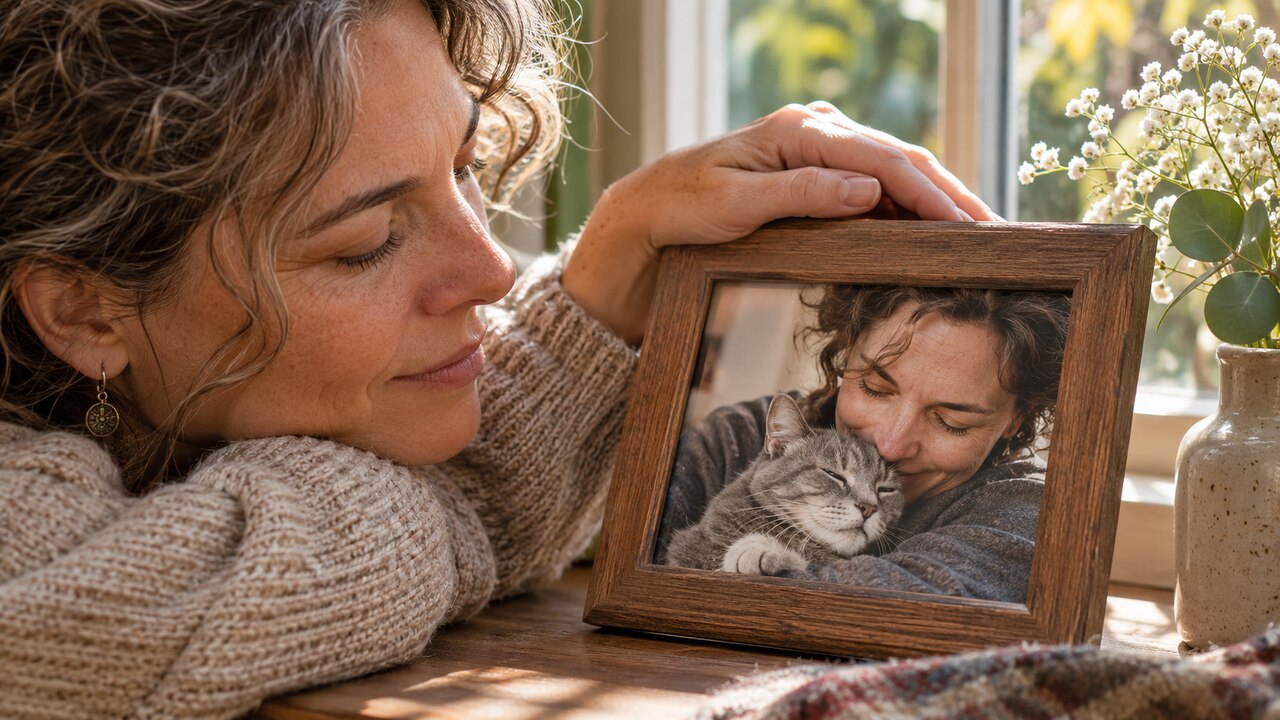
- The ordinary miracle: them asleep against you, exactly as they did, in the middle of an ordinary afternoon.
Gentler styles usually serve this better than sharp ones — watercolor and soft cinematic render grief gracefully; see the styles guide. And one practical note: writing the scene is easier if you write the markings sentence first — the blaze, the socks, everything that makes them them — the markings guide shows how. That sentence, for many people, is the part where the pet comes back into the room.
Taking it at your own pace
- Stop whenever you want. Uploading the photos can be the hardest minute of the whole process. It's fine to close the tab for a week after it.
- Let the first result be a draft. Judge it gently and specifically — the expectations guide — and change one thing at a time. There's no version of this that benefits from rushing.
- Keep the near-misses. Later, you may find the ones that weren't quite right are also worth keeping. Everything stays in your history until you decide otherwise.
Being clear about what it is
A memorial portrait is an AI-generated image — made from your real photos, of your real pet, in a scene that is imagined. Most people find that framing honest and comforting: it's not a fake photograph of something that happened; it's a true portrait of a relationship that did. When you share it, saying so ("a portrait I made from our photos") tends to feel right, and it lets the image do its work without needing to pass as documentary.
After
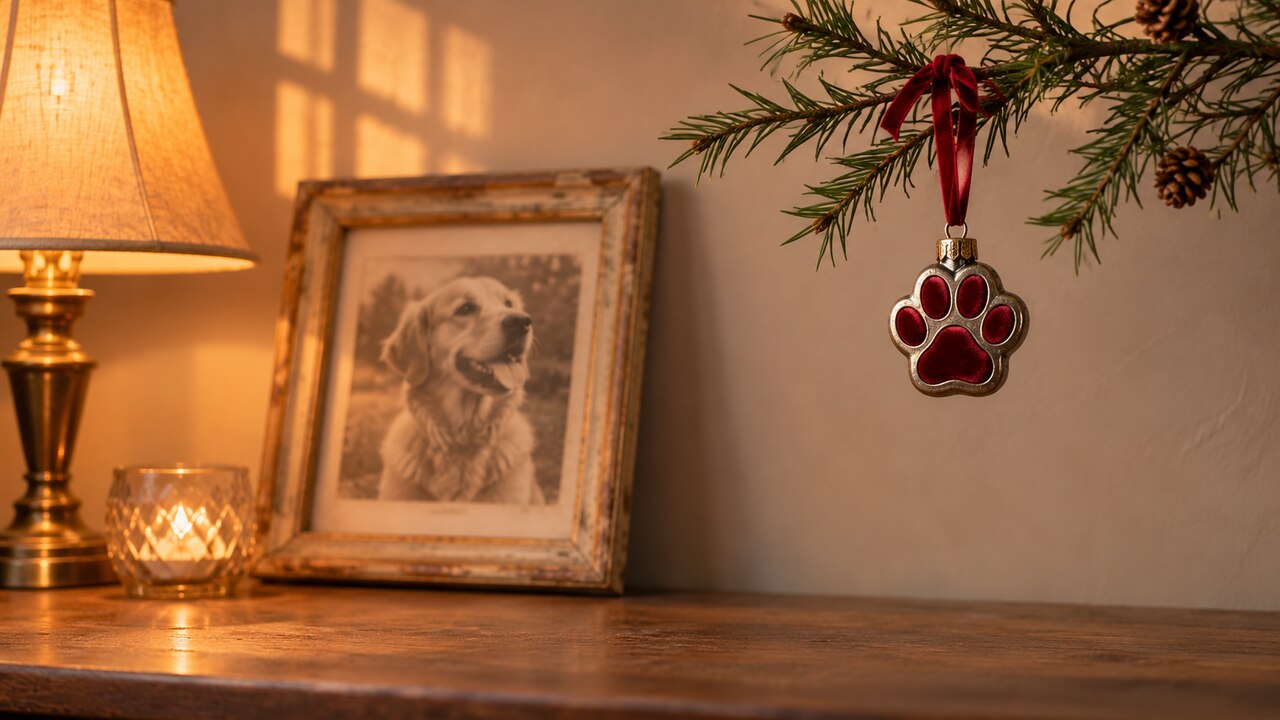
What people do with a finished memorial portrait: print it, frame it quietly, keep it as a phone background, share it with the people who knew them. If you're looking for other ways to remember — most of which don't involve making anything at all — the remembering guide is a fuller list, and the first-holiday guide covers the seasons that hit hardest.