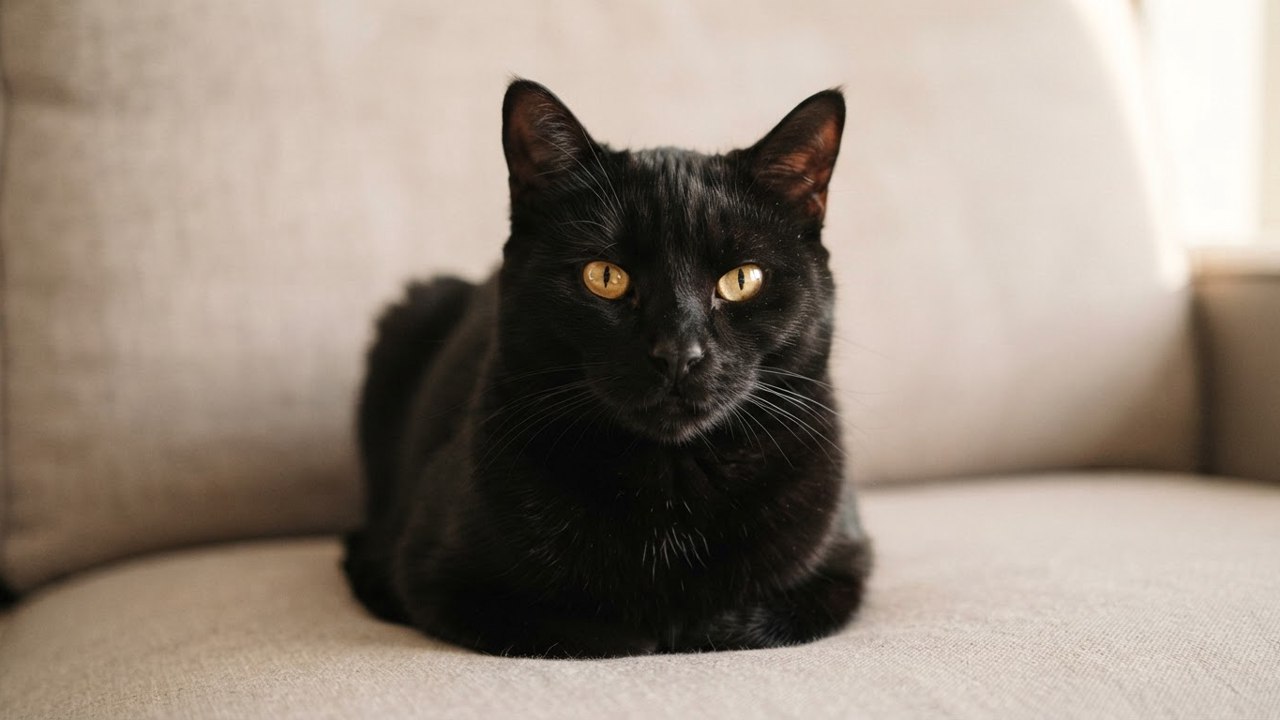
Black cats and black dogs are the classic "unphotogenic" pets, which is unfair: they aren't hard to photograph, they're hard for a camera to photograph. A dark coat gives the exposure meter almost nothing to work with, so the camera overcorrects and renders your pet as a lovable shadow with ears.
Four adjustments fix nearly all of it. None of them require buying anything.
1. Light from the side or front — never from behind
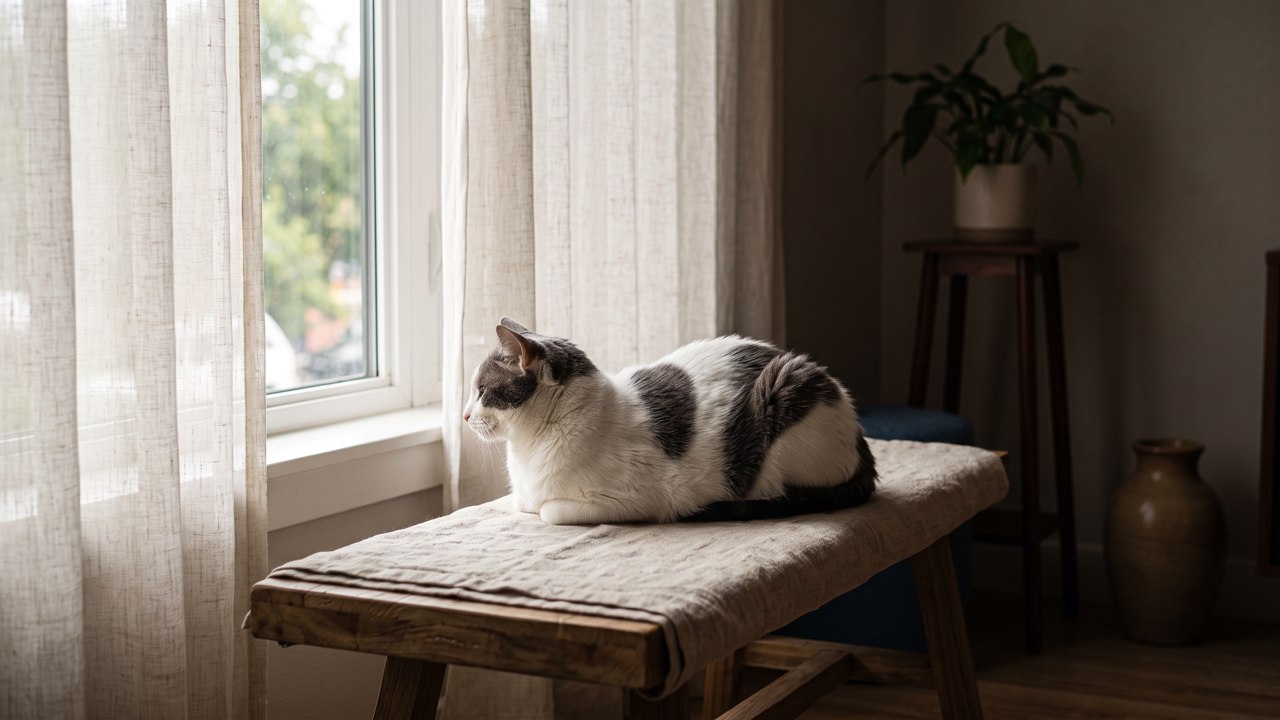
Put your pet between you and a window, so daylight falls across the face and coat. Backlight — the classic mistake, shooting toward the window — turns even a well-lit black coat into a pure silhouette.
The goal with a dark coat is texture light: light that skims across the fur and reveals its surface. A window to your pet's side does this beautifully; you'll see the fur catch the light strand by strand instead of reading as one flat black shape.
2. Choose a background a few shades lighter
A black cat on a dark couch has no edges; a black dog against a dark hedge is a floating pair of eyes. Give the camera something to separate: a light wall, a pale couch, an overcast sky, sand, snow. You don't need white — just visibly lighter than the coat.
The same works in reverse for light-coated pets: cream carpet is the golden retriever's natural enemy.
3. Take control of the exposure
This is the one setting change that matters. Tap your pet's face on the phone screen, then drag the exposure slider up slightly — a touch brighter than feels natural. The camera wants to average the whole scene; your pet occupies too little of it and gets crushed to black.
Brightening "too far" on purpose is recoverable later; an underexposed black coat with no detail is not.
4. Hunt for catchlights
A catchlight is the small reflection of a window in the eye — and on a dark face, it's the difference between a portrait and a void. Face your pet roughly toward the window and watch their eyes: when two bright points appear, you have your shot. This is also why the "attention noise then burst mode" routine from the main photography guide earns its keep here: the eyes-forward moment is exactly when the catchlights show.
Bonus: dark coats and AI portraits
Dark-coated pets are also where reference photo quality matters most for AI portraits, for the same reason: if the reference photo shows a silhouette, the model is guessing at the coat. Before uploading:
- Pick references shot in soft daylight with visible fur texture, not flash-lit frames.
- Prefer a slightly brighter photo over a dramatic one — the model needs the color and sheen information.
- Still name the coat in the prompt ("short black coat with a white chest patch") — for dark pets, the marking details that survive in low light are the ones worth stating.
More on choosing what to upload in the reference photo guide.
Frequently asked questions
Should I use the flash just this once?
No — flash flattens dark fur into a hard-edged shape, reddens eyes, and most pets find it aversive. A window and a two-step exposure adjustment do more, for free.
Does night mode help?
For a still pet in dim room light, it can — but night mode struggles with movement, and pets are movement. Daylight by a window remains the reliable answer.
My black pet looks brown in photos. Why?
Strong warm light (low sun, tungsten bulbs) records black coats as brown or rusty. Shoot in neutral daylight or overcast light if the true coat color matters — which it definitely does when the photo becomes an AI portrait reference.