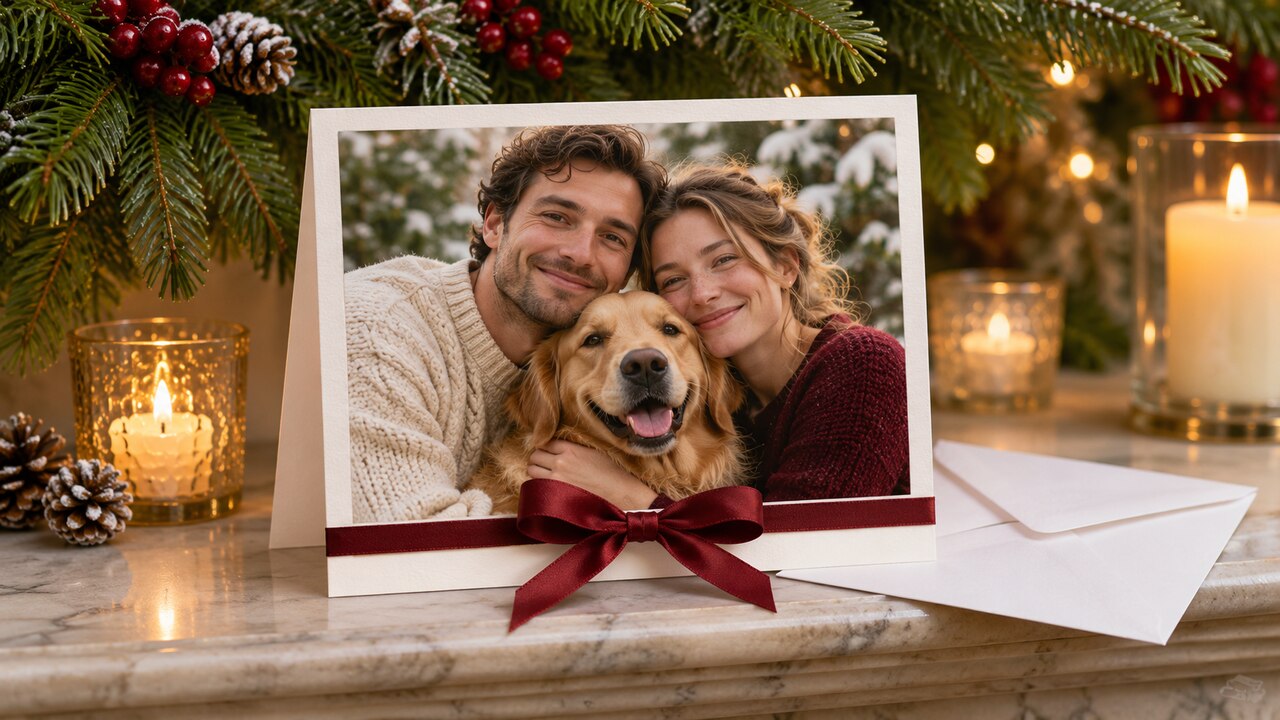
The holiday card is the one photograph of the year with a deadline, an audience, and a printing press at the end of it — which is exactly why it's worth doing deliberately. The good news: an owner-and-pet portrait made from photos you already have beats most studio sessions, and the whole thing fits comfortably before December if you start on time.
Start from one good photo — any season
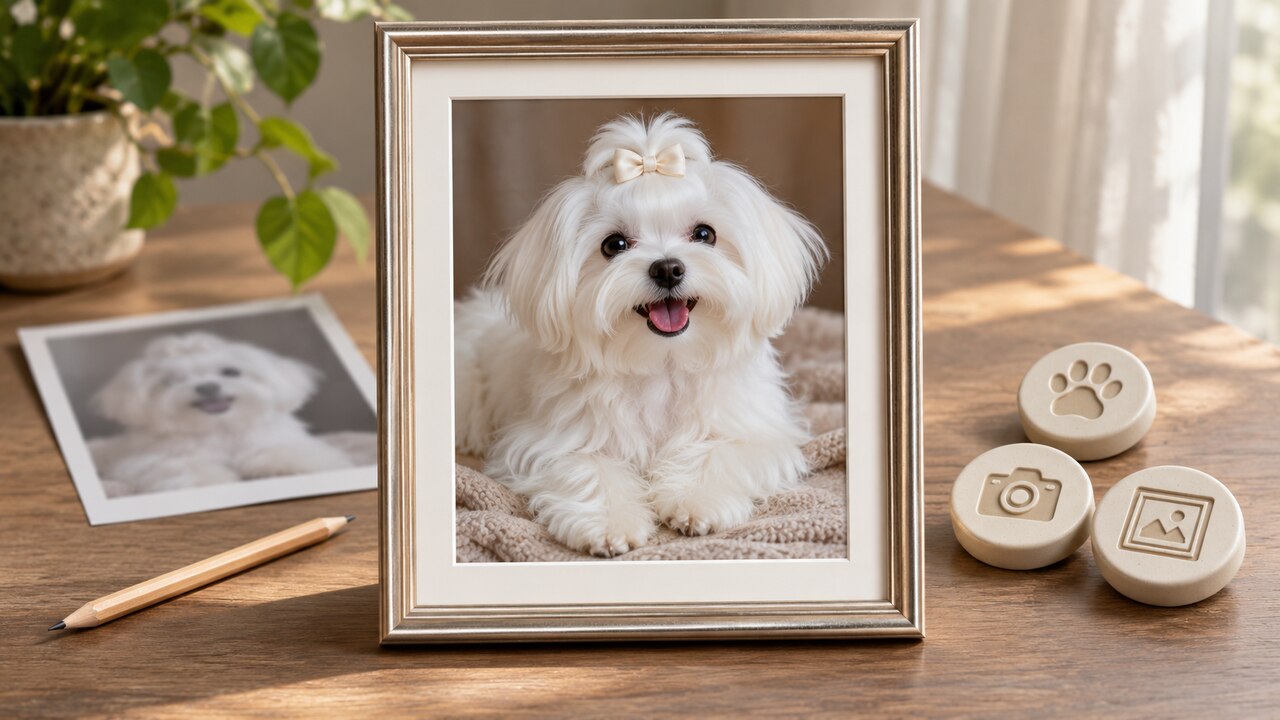
The base image doesn't need to be Christmassy. What it needs to be is clear: faces visible, markings shown, the two of you (or just the pet — cards work either way) recognizable. A summer golden-hour shot makes a warmer card than a rushed December snapshot; the scene is the model's job. The reference guide is the bar to clear.
Five card scenes that work
- The tree sit: both of you by the tree, warm lamps, slightly worn wrapping paper — the classic because it works.
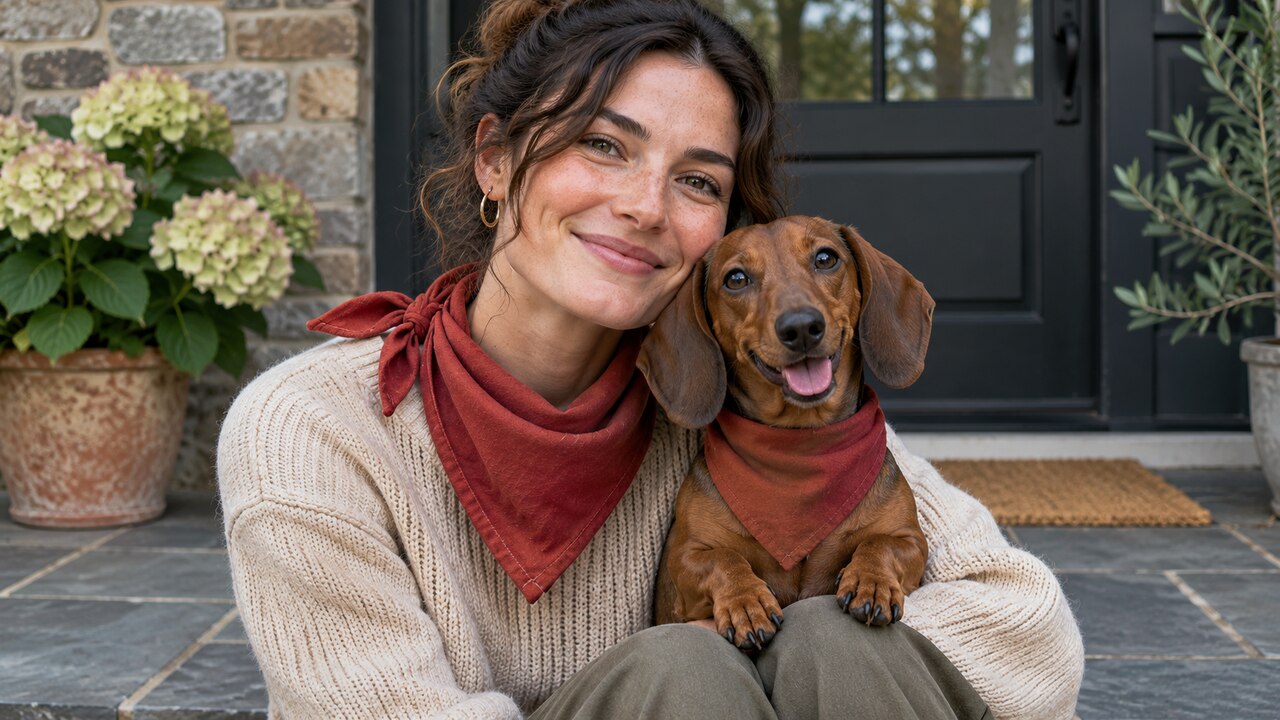
- The matching-scarf portrait: seasonal twinning per the twinning guide — reds, creams, one accent.
- The snowy doorstep: coats on, breath visible, wreath on the door behind — the "we're home for the holidays" frame.
- The cozy candid: blanket, cocoa, pet on your lap, tree bokeh in the background — reads as a real moment because it is one.
- The studio seasonal: clean backdrop, coordinated colors — for cards that need to match a design template; also the strongest for likeness per the styles guide.
The text rule
Don't ask the model to render the greeting. Text inside generated images is unreliable — mangled letters are the classic tell (the tells guide) — and card text needs to be perfect. Generate the image clean, leave quiet space in the composition for the greeting ("negative space above the sofa"), and add the words in the card tool or any editor. Two minutes, flawless.
Style and identity quick notes
- Warm styles (cinematic, watercolor) suit the season; studio suits template cards. Pick with the styles comparison.
- Markings discipline doubles in importance — the card goes to people who know the animal. The markings sentence goes in the prompt verbatim.
- Judge results with the expectations checklist; rerun the specific miss, not the whole idea.
The timeline (work backwards from sending)
- Early November: pick the base photo and scene; make the first portrait. Rerun while it's cheap and unhurried.
- Mid-November: final portrait chosen; design the card, add text.
- Late November: order prints. Every print service's deadline is earlier than you think.
- First week of December: envelopes, stamps, done — while everyone else is scrambling. The same rhythm works for any seasonal deadline, per the year-round checklist.
Frequently asked questions
Can the card include more than one pet or person?
Yes, with the usual rule: get each subject recognizable alone before combining them, and name every marking in the prompt. Group scenes need one more rerun of patience than pairs.
My pet has passed — can last year's photos make this year's card?
Many families do exactly this, and it deserves care rather than hustle: choose the clearest photos from that time, keep the scene gentle, and take the time you need. There's no deadline on a portrait like that — see the memory-adjacent ideas in the ideas list.
Is a generated card photo "cheating"?
It's a portrait of your actual pet from your actual photos — the modern version of commissioning a card illustration. The people who receive it care that it's unmistakably your animal; that's what the method protects.