A prompt for an owner-and-pet portrait doesn't need to be poetry, and it shouldn't be a paragraph of adjectives. It needs to answer three questions in order: where are we, what are we doing, and what must stay true. Models follow that structure remarkably well — and follow adjective soup remarkably badly.
This guide assumes you're working in the image generator with your reference photos uploaded; if you started from the template gallery, you already have a working prompt and this is how to edit it into yours.
The formula
[Scene with light and season] + [both subjects, with build and coat] + [pose and interaction] + [the identity sentence] + [one mood note]
Identity sentence means the markings and features that make it your pet and you — the part most beginners leave out entirely, and the part that decides whether the result is "a woman and a corgi" or "us".
Two worked examples
Example A — everyday warm:
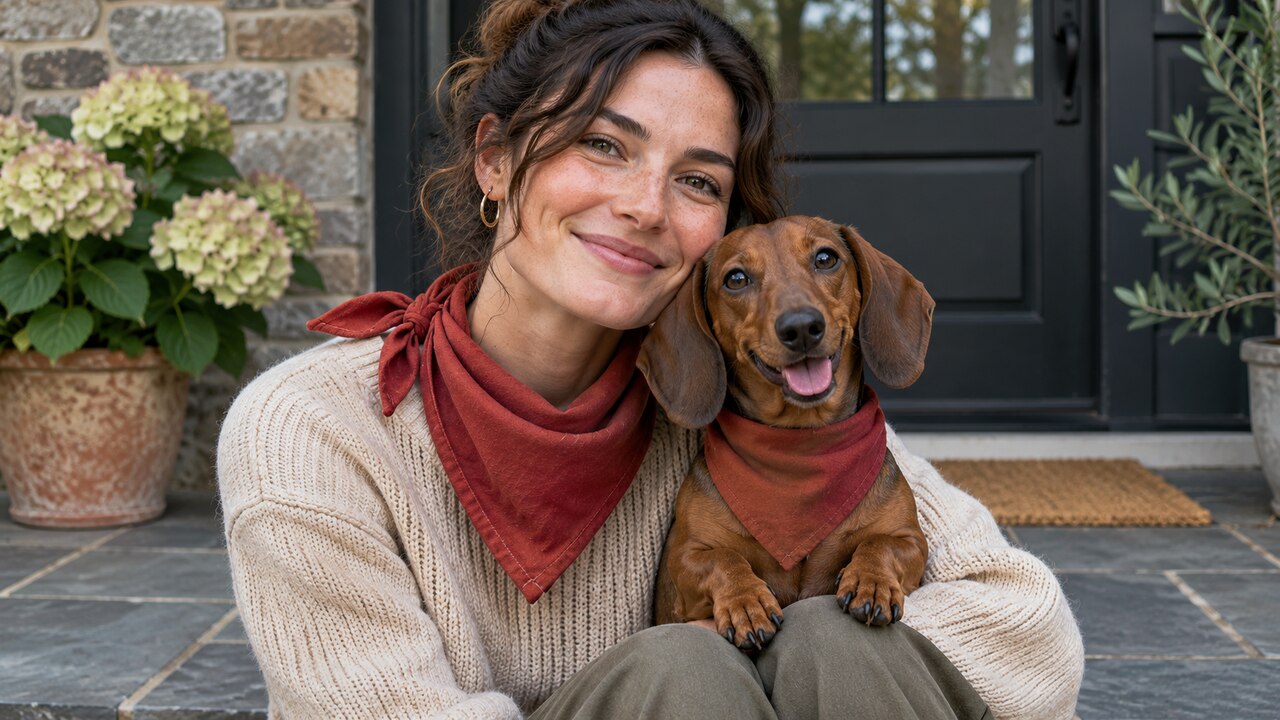
"A quiet living room in late-afternoon light, a woman in her thirties with shoulder-length dark hair and round glasses sitting cross-legged on a rug, with her corgi leaning against her leg — golden coat, white blaze narrowing from nose to forehead, white chest and socks on the front paws. Her hand rests on the collar. Warm, calm, unposed."
Example B — outdoors, cinematic:
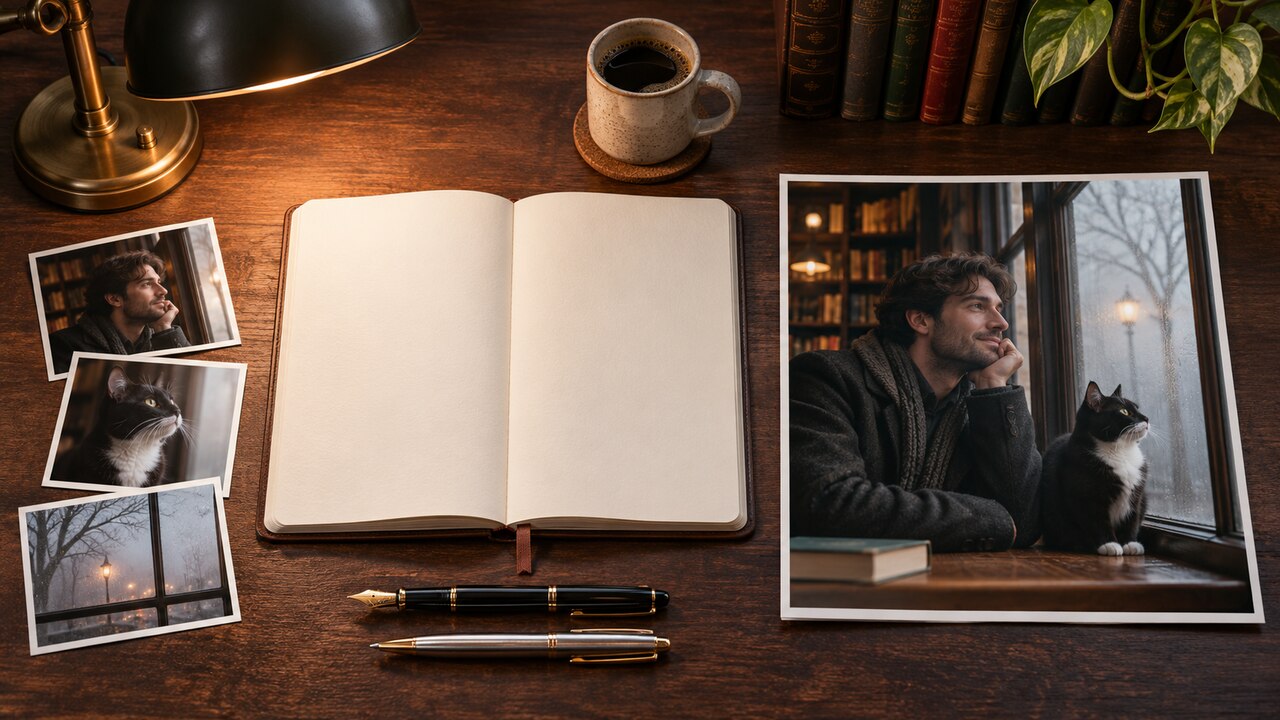
"A sunlit apple orchard in early autumn, a tall man with a short beard wearing a flannel shirt, kneeling beside his black-and-white tuxedo cat sitting on a wooden crate — white chest and belly, white socks on all four paws, black tail with a white tip. Both facing the camera softly. Golden-hour light, shallow depth, gentle breeze in the grass."
Notice what both do: subjects described plainly (age, hair, build, coat), pose specified with real physical contact ("leaning against her leg" — contact grounds a portrait), and markings named precisely. Neither uses more than a handful of adjectives.
The five mistakes that cost reruns
- Adjective stacks. "beautiful stunning majestic hyper-realistic 8k masterpiece" — models don't grade effort; they mostly ignore it. Spend the words on scene and identity instead.
- Leaving identity to the references alone. References steer; the prompt settles. A marking named in both channels survives far more runs than one carried by references alone — see the markings guide.
- Poses without contact. "Me and my dog standing" gives you two awkwardly parallel subjects. Put a hand on the collar, an arm around, a chin on a head — anywhere the two of you touch.
- Changing everything after a miss. One correction per rerun: the marking that drifted, the pose that stiffened. Wholesale rewrites reset your progress.
- Describing what you don't want at length. Long "no wings, no extra limbs" lists sometimes backfire by putting the ideas in play. State the positive version instead — "a natural, plausible pose".
A fill-in template
Copy this and fill the brackets:
"[place and season] in [light], [you: age range, hair, one feature, one clothing note] [position: sitting/standing/kneeling], with [pet: breed or build, coat color and length] — [markings, 3–6 specifics, with locations]. [The interaction: hand on collar / pet leaning against leg / both looking toward the camera]. [One mood word or two, e.g. 'warm and unposed' / 'quiet and dignified' / 'playful, mid-laugh']."
Then check it against the result with the review checklist, adjust one element, rerun if needed. That loop — specific prompt, careful check, one change — is the entire craft.
Frequently asked questions
Do I write the prompt in English if I'm not an English speaker?
Yes — models are trained overwhelmingly on English and respond to it most reliably, and the generator's interface is built around it. Simple, concrete English beats elaborate phrasing every time.
How long should the prompt be?
Three to six sentences. Long enough to cover scene, subjects, pose and markings; short enough that every sentence is doing work. If a sentence doesn't change what the image should look like, cut it.
Should I mention the style too?
If you care about the style, yes — one phrase is enough ("watercolor style", "studio portrait, clean backdrop"). The five main styles and what each does with likeness are compared here.