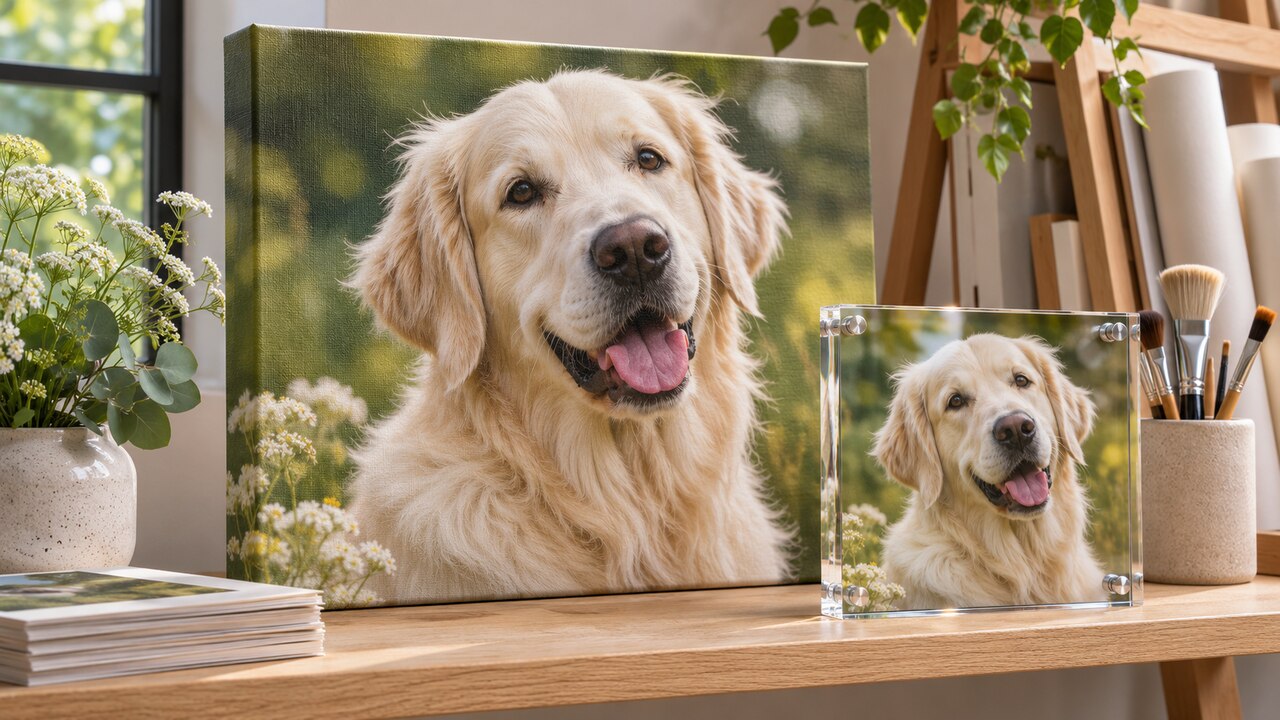
A portrait that lives on your phone is half a portrait. Printing it is where an AI-generated image becomes an object — something on a wall, on a shelf, wrapped at a birthday. This is the guide to the seven print formats worth knowing, what each is genuinely good for, and how to prep your file so the print does the portrait justice.
First: prep the file
Print is less forgiving than screens, so two habits before anything else:
- Render at final quality, then download at full size. The 4K renders exist for exactly this — a print needs resolution the screen never demanded. The cost guide explains when the final render is worth it.
- Match the print's shape. Generate (or re-render) in the aspect ratio of the frame: square for square formats, 4:5 or 3:4 for classic portraits. Cropping later can cut a tail or a hand that made the portrait work.
The seven formats
1. The framed print
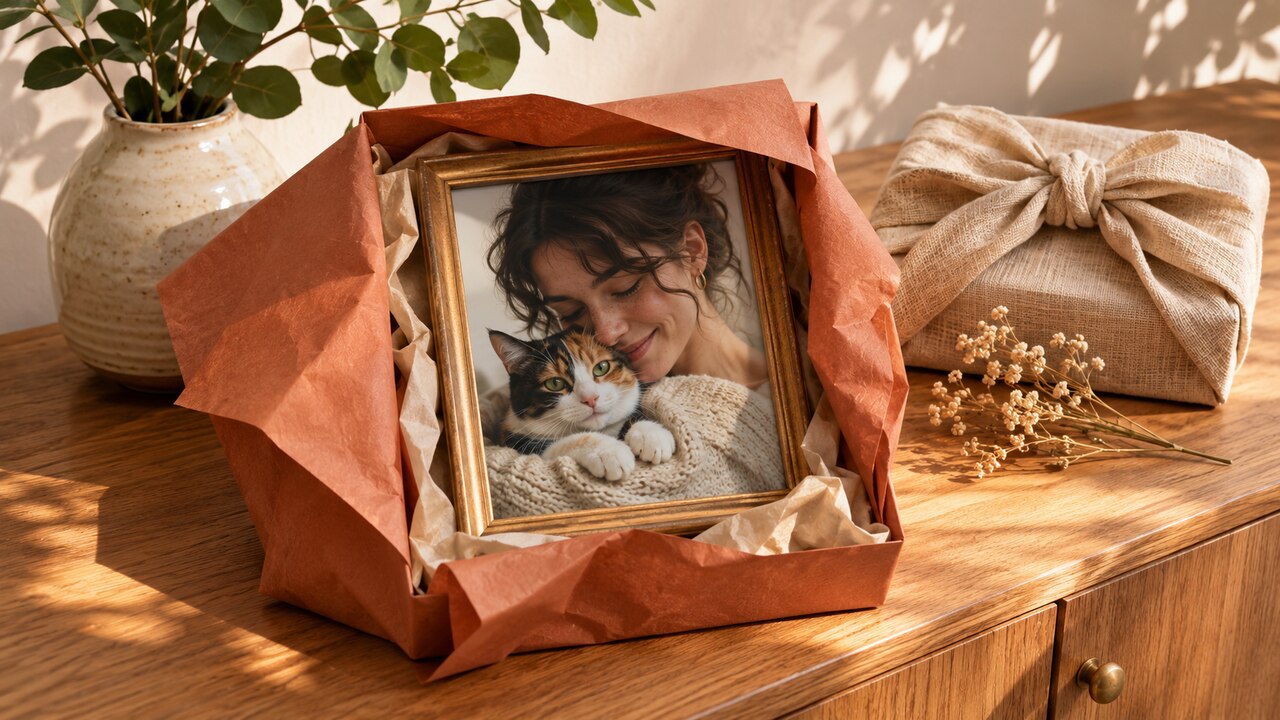
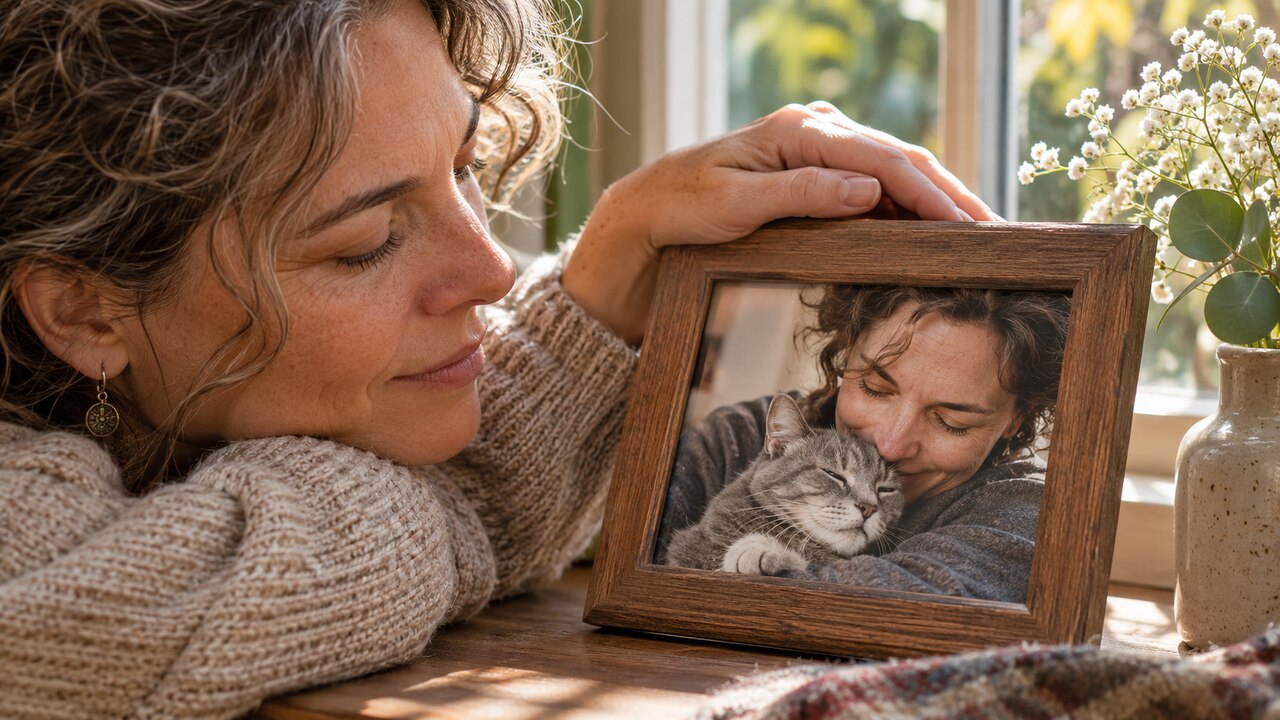
The default for good reason. 8×10 or A4 with a mat for desks and shelves; 16×20 and up for walls. Works with every style — studio and cinematic for modern rooms, oil and watercolor for traditional ones.
2. The canvas
Gallery-wrapped, no frame, reads as "art" instantly. Best for painterly styles — an oil-style portrait on canvas is the closest an AI image comes to the object it's imitating. Textured coat styles (watercolor, oil) hide canvas grain; sharp studio shots can show it at close range.
3. The metal or acrylic print
Modern, vivid, high contrast — the format for cinematic styles with strong color. Pet fur against a deep sky, golden-hour light: metal makes it glow. Softer pastels can go flat; that's what canvas is for.
4. Cards and stationery
The highest-joy-per-credit format there is. One portrait becomes a year of thank-you cards; a seasonal scene becomes the holiday card. Print small runs locally or online; keep text out of the image and add it in the card tool.
5. The photo book page
The underrated one: a small book of the year's portraits — the seasonal series, the ideas you worked through, before-and-after reruns — becomes the pet's own volume. Books want several images; generate a series before you design one.
6. The soft goods
Blankets, pillows, mugs: comfort objects, which is the point with pets. Honest note: fabric dulls fine detail, so pick portraits with bold composition over fine texture, and expect softness rather than crispness.
7. The keepsake sizes
Wallet prints, ornaments, small framed 4×6s — the format for multiples. Grandparents, aunts, the vet who saw them through it. One portrait, six copies, done.
Where to print
Any photo print service handles AI-generated images — they're just image files. If you'd rather skip the upload-and-format shuffle, the PetAndMe shop is the in-house route for printed pieces built around portraits; what's on its shelves changes over time, so browse it for the current lineup. Either way, the file prep above is the same.
Frequently asked questions
Do print shops accept AI-generated images?
Yes — a generated portrait is an ordinary image file to any print pipeline. The two things that matter are the same as for photos: resolution and aspect ratio.
What resolution do I need?
For a 300-dpi print, the math is simple: an 8×10 wants roughly 2400×3000 pixels; a 16×20 wants 4800×6000. Render at the highest quality setting your model offers for wall pieces, and check the downloaded file's dimensions against the print size before ordering.
Which style prints best?
Painterly styles are forgiving on every material; photographic styles reward the sharper formats (framed, metal). The full trade-offs are in the styles guide.